The secret life of Cinnamon: A kitchen spice with potential health effects
True Cinnamon
Spice Guide
Heritage
What if a simple kitchen spice that we use every day could affect major health problems in the world?
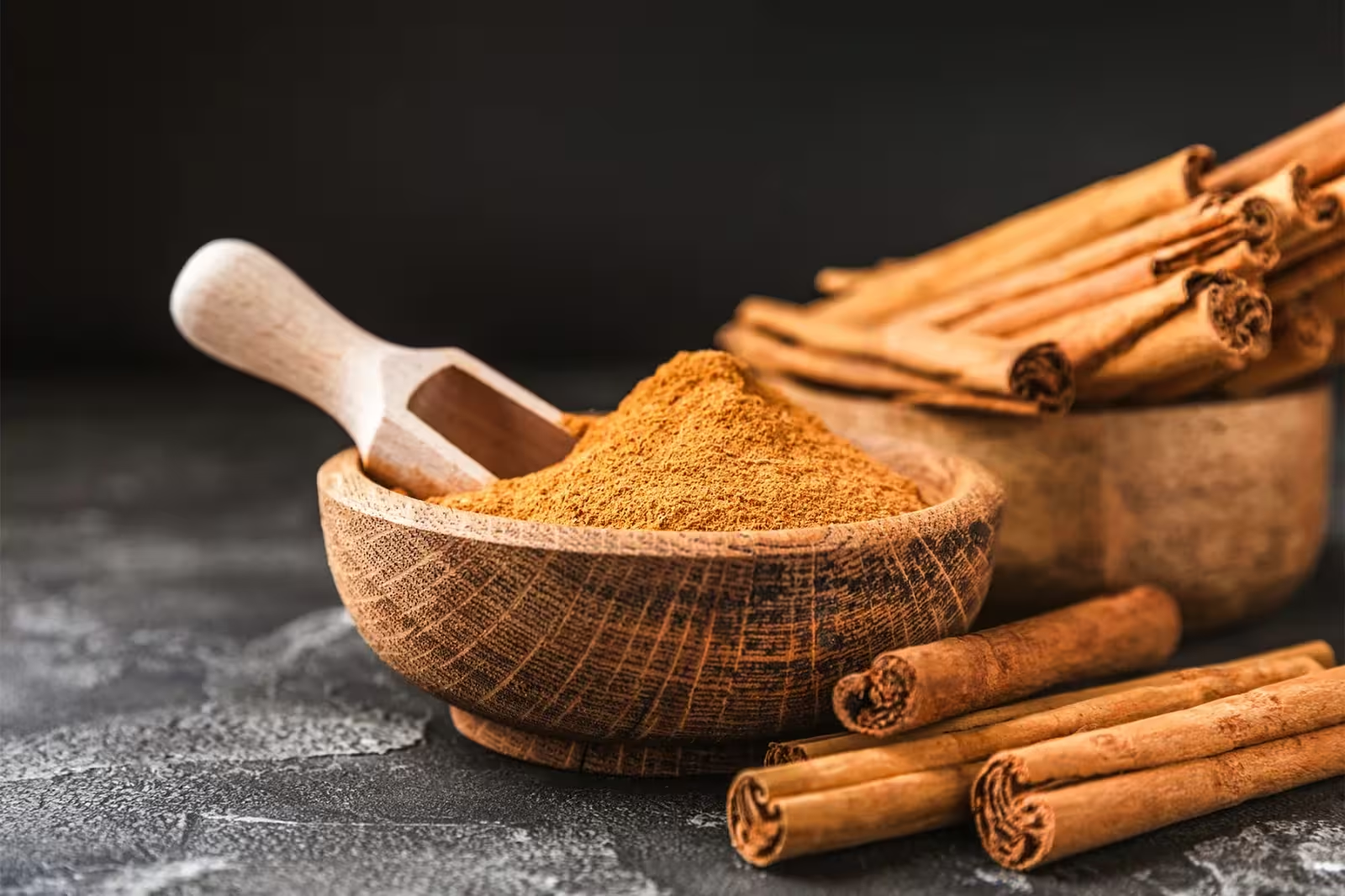 Although this may sound surprising, it is no longer unrealistic today.Many spices that have been used for centuries are now being studied due to their health benefits.
Since the British colonial period, Sri Lanka has become one of the main countries involved in the spice trade. Even though it has been used for its aroma and taste, the perspective on spices has changed over time. With growing scientific findings and increasing health concerns, researchers are now investigating the potential role of cinnamon to improve human health. Cinnamon contains several chemical components that scientists have now extracted and studied through laboratory testing. These studies have revealed that cinnamon possesses antioxidant and anti-inflammatory effects in the body.Apart from that, they have found that cinnamon does not act through a single biological pathway. Instead, it can influence multiple metabolic pathways in the body, including glycolysis, gluconeogenesis, and fatty acid metabolism. Although people know cinnamon has these potential health benefits, the next question is what role can cinnamon play in our day-to-day health problems?
Although this may sound surprising, it is no longer unrealistic today.Many spices that have been used for centuries are now being studied due to their health benefits.
Since the British colonial period, Sri Lanka has become one of the main countries involved in the spice trade. Even though it has been used for its aroma and taste, the perspective on spices has changed over time. With growing scientific findings and increasing health concerns, researchers are now investigating the potential role of cinnamon to improve human health. Cinnamon contains several chemical components that scientists have now extracted and studied through laboratory testing. These studies have revealed that cinnamon possesses antioxidant and anti-inflammatory effects in the body.Apart from that, they have found that cinnamon does not act through a single biological pathway. Instead, it can influence multiple metabolic pathways in the body, including glycolysis, gluconeogenesis, and fatty acid metabolism. Although people know cinnamon has these potential health benefits, the next question is what role can cinnamon play in our day-to-day health problems?Let's dive into it.Weight and metabolism
When considering the younger generation, one of the main problems they face is weight gain and the inability to control it. Even with technological advancements and modern fitness techniques, many are still not in a healthy state. They follow many workout routines, calorie-cutting diets, and supplements like green tea. Due to this, scientists are now focusing on natural products. Recently, cinnamon has gained attention as a natural compound with a potential role in this area. Experimental studies have shown that cinnamon supplementation can help reduce Body Mass Index(BMI).The main driving force behind this is the influence on blood sugar regulation. Increased blood sugar can lead to weight gain. Cinnamon may help improve insulin sensitivity, meaning cells can take up glucose from the bloodstream more effectively. Also, it may help to reduce sudden blood sugar spikes after meals, which are often linked to fat storage and weight gain. Researchers have observed that cinnamon can slow down carbohydrate absorption after eating by affecting digestive enzymes. Also, cinnamaldehyde may help people feel fuller for longer, which can be more helpful for weight control.
 Blood sugar and diabetes
One of the biggest health crises today is high blood sugar and diabetes. Even though diabetes was considered a disease among only adults, now it has affected younger people too. According to the International Diabetes Federation, nearly one in nine adults worldwide is living with diabetes, which clearly shows how strongly lifestyle and diet affect health.High blood sugar refers to having high glucose levels in the blood. Diabetes occurs when cells can't uptake glucose due to insensitivity of insulin receptors.
Blood sugar and diabetes
One of the biggest health crises today is high blood sugar and diabetes. Even though diabetes was considered a disease among only adults, now it has affected younger people too. According to the International Diabetes Federation, nearly one in nine adults worldwide is living with diabetes, which clearly shows how strongly lifestyle and diet affect health.High blood sugar refers to having high glucose levels in the blood. Diabetes occurs when cells can't uptake glucose due to insensitivity of insulin receptors. Studies have shown that cinnamon may slow down how quickly carbohydrates are broken down after meals. Due to that, carbohydrates remain longer before converting into glucose, helping to reduce sudden blood sugar spikes.
Scientific findings have shown that compounds such as hydroxychalcone and cinnamaldehyde B1 can influence glucose metabolism.
Apart from that, some clinical studies have shown the impact of cinnamon on fasting blood glucose levels as well as cholesterol profiles.Blood pressure and heart health
High blood pressure is considered a silent killer because of its potential side effects, which increase the risk of heart diseases, stroke, and kidney problems over time. So, scientist have paid their attention to using natural compounds to improve overall heart health.
Cinnamon, which has gained attention in this area, has antioxidant activity that reduces oxidative stress, which eventually leads to chronic inflammation. Cinnamon contains compounds such as cinnamaldehyde and polyphenols, which neutralize harmful reactive oxygen species and help balance overall antioxidant levels.
Current evidence indicates that cinnamon has the potential to help vasodilation, which simply means to widen blood vessels, allowing blood to flow more easily through the body. In addition, cinnamon may contribute to the lining of blood vessels and reduce inflammation, both important for cardiovascular health.
Interestingly, blood pressure is connected to metabolism, too. In experimental studies involving overweight or diabetic individuals, cinnamon was linked to small improvements in both blood pressure and body measurements.Cancer control
Even though scientists have tried numerous solutions for cancer, they still haven't found an effective answer. Even with modern advancements, they are still exploring new ways to slow down and prevent cancer and gain a better understanding of how cancer is growing inside the body.
Emerging evidence suggests that cinnamon may help reduce inflammation and oxidative stress. Both are linked with abnormal cell growth and even increased programmed cell death. There's even interest in how cinnamon might degrade enzymes involved in DNA replication, such as dihydrofolate reductase, which is a key process in cell growth.Cinnamon in day-to-day life
While those issues are still ongoing, cinnamon can be used in many ways. It can be easily incorporated into
Studies have shown that cinnamon may slow down how quickly carbohydrates are broken down after meals. Due to that, carbohydrates remain longer before converting into glucose, helping to reduce sudden blood sugar spikes.
Scientific findings have shown that compounds such as hydroxychalcone and cinnamaldehyde B1 can influence glucose metabolism.
Apart from that, some clinical studies have shown the impact of cinnamon on fasting blood glucose levels as well as cholesterol profiles.Blood pressure and heart health
High blood pressure is considered a silent killer because of its potential side effects, which increase the risk of heart diseases, stroke, and kidney problems over time. So, scientist have paid their attention to using natural compounds to improve overall heart health.
Cinnamon, which has gained attention in this area, has antioxidant activity that reduces oxidative stress, which eventually leads to chronic inflammation. Cinnamon contains compounds such as cinnamaldehyde and polyphenols, which neutralize harmful reactive oxygen species and help balance overall antioxidant levels.
Current evidence indicates that cinnamon has the potential to help vasodilation, which simply means to widen blood vessels, allowing blood to flow more easily through the body. In addition, cinnamon may contribute to the lining of blood vessels and reduce inflammation, both important for cardiovascular health.
Interestingly, blood pressure is connected to metabolism, too. In experimental studies involving overweight or diabetic individuals, cinnamon was linked to small improvements in both blood pressure and body measurements.Cancer control
Even though scientists have tried numerous solutions for cancer, they still haven't found an effective answer. Even with modern advancements, they are still exploring new ways to slow down and prevent cancer and gain a better understanding of how cancer is growing inside the body.
Emerging evidence suggests that cinnamon may help reduce inflammation and oxidative stress. Both are linked with abnormal cell growth and even increased programmed cell death. There's even interest in how cinnamon might degrade enzymes involved in DNA replication, such as dihydrofolate reductase, which is a key process in cell growth.Cinnamon in day-to-day life
While those issues are still ongoing, cinnamon can be used in many ways. It can be easily incorporated into
- Tea or coffee for added flavor
- Smoothies
- Breakfast cereals, traditional home-style food
 So, what does all this actually mean?
Cinnamon is not a miracle cure, and researchers are still trying to fully understand its benefits and limitations.Its interaction with several pathways in the body is the reason why cinnamon continues to appear in research connected to diabetes, heart health, weight management, and even brain and cellular health. Alongside this, it's important to remember that most of the strongest evidence still comes from laboratory and animal studies rather than large-scale human clinical trials.
So, what does all this actually mean?
Cinnamon is not a miracle cure, and researchers are still trying to fully understand its benefits and limitations.Its interaction with several pathways in the body is the reason why cinnamon continues to appear in research connected to diabetes, heart health, weight management, and even brain and cellular health. Alongside this, it's important to remember that most of the strongest evidence still comes from laboratory and animal studies rather than large-scale human clinical trials.